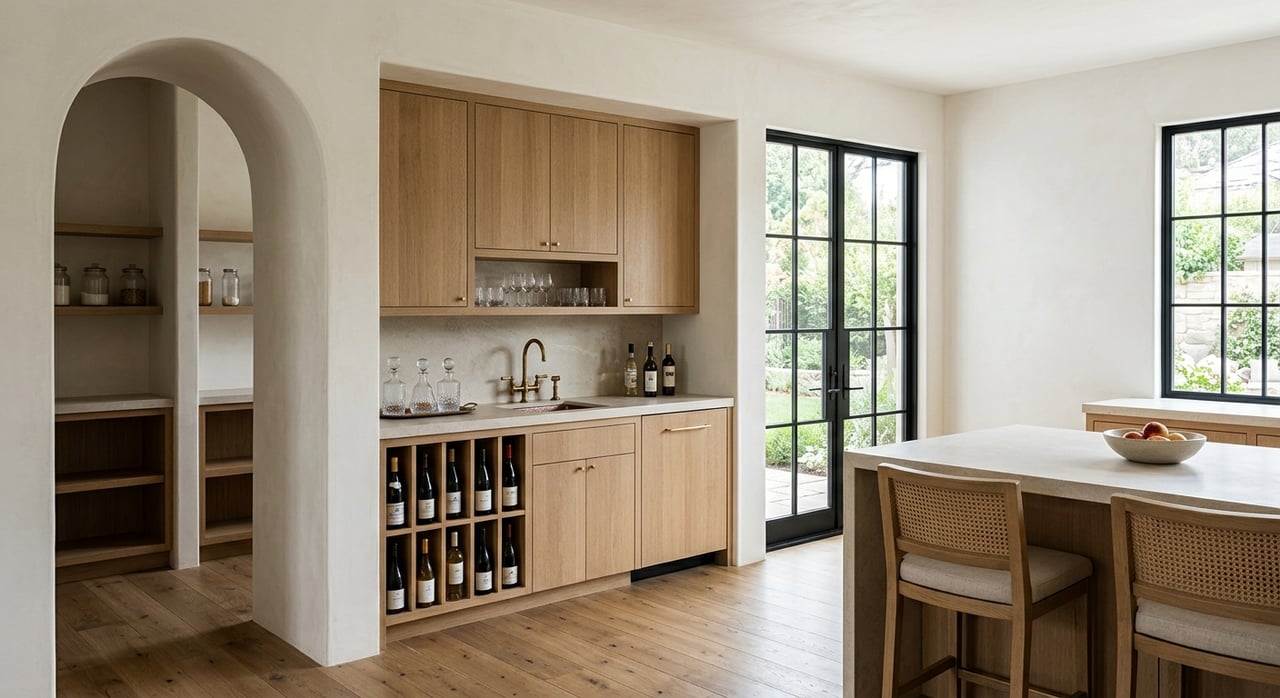
Designing Your Ideal Wine Country Retreat in Healdsburg
June 18, 2026
June 18, 2026
If you picture a wine country retreat, chances are you imagine long outdoor dinners, easy mornings with coffee on the patio, and a home that feels both polished and relaxed. In Healdsburg, that vision can feel especially natural because the setting already supports a lifestyle shaped by food, wine, outdoor time, and a compact downtown centered around the plaza. If you are thinking about buying, building, renovating, or refining a retreat-style home here, it helps to design around the way Healdsburg actually lives. Let’s dive in.
Healdsburg sits along the Russian River and brings together a plaza-centered downtown with shops, restaurants, tasting rooms, galleries, and bars. It also sits where the Russian River Valley, Dry Creek Valley, and Alexander Valley meet, which helps explain why the area feels so connected to wine country living.
That context matters when you think about design. A retreat in Healdsburg usually works best when it supports both quiet daily living and easy hospitality. You want a home that feels comfortable on a normal Tuesday, but also ready for a weekend with guests.
Healdsburg’s climate gives you a strong starting point for planning your spaces. NOAA normals for the Healdsburg station show an annual mean temperature of 60.2°F, an average daily high of 73.6°F, annual precipitation of 42.81 inches, and no measurable snowfall.
Summer is one of the biggest design clues. July and August average highs are 88.7°F and 88.3°F, and rainfall is essentially absent from July through September. That makes shade, airflow, and low-water landscaping more than style choices. They are practical ways to make the home comfortable and easier to maintain.
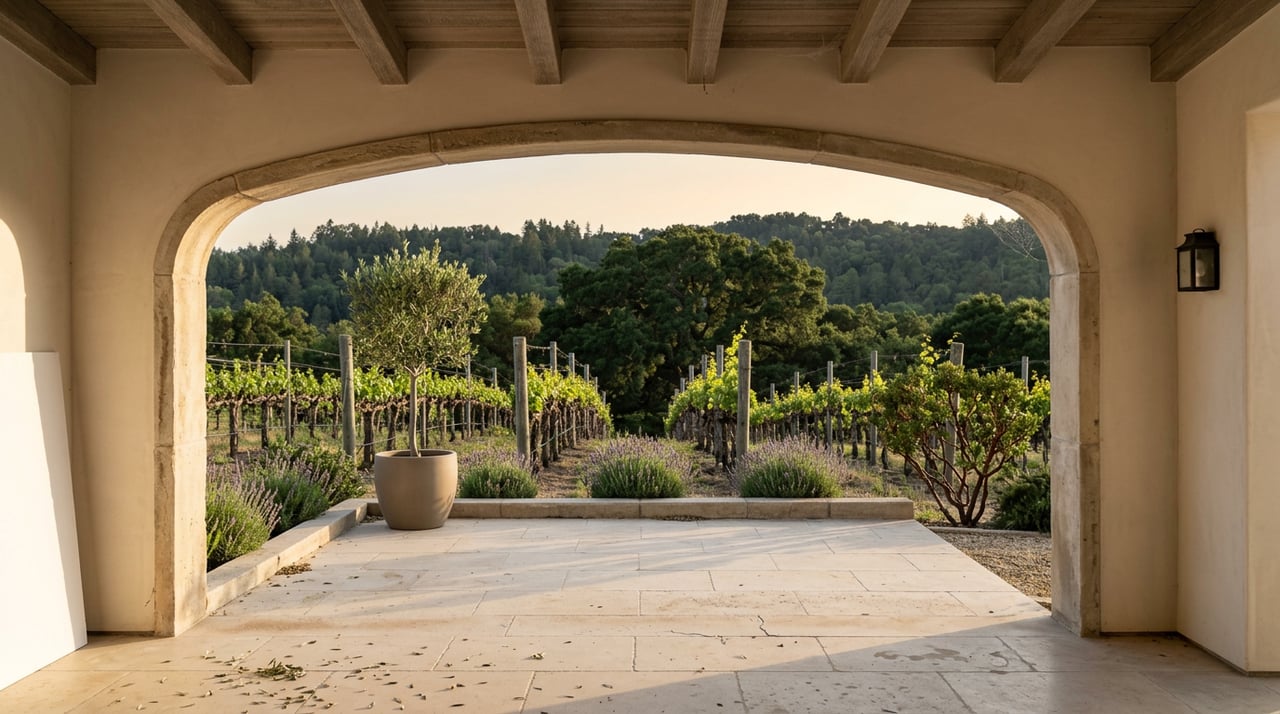
In a hot, dry summer climate, outdoor areas need protection from direct sun if you want to use them often. Covered patios, pergolas, and shaded dining spaces can help extend your living area in a way that feels natural for Healdsburg.
Inside, strong cross-ventilation can also make a big difference. If you are planning a remodel or evaluating a property, pay attention to window placement, door openings, and how easily the home moves air from one side to the other.
The City of Healdsburg says about 80% of its water supply comes from the upper Russian River and about 20% from Dry Creek. The city recommends drought-tolerant landscaping, rainwater capture, and efficient irrigation tools as part of its conservation strategy.
For you, that means the most successful retreat landscape may not be the one with the most lawn or the highest upkeep. Native plantings, shade trees, gravel or paver transitions, and efficient irrigation can help create a refined outdoor setting that is also realistic for the local environment.
One of the clearest ways to make a Healdsburg home feel like a true retreat is to improve the connection between interior gathering spaces and the outdoors. Because the local setting is so tied to dining, entertaining, and time outside, kitchen, dining, and patio areas should work together smoothly.
That does not always require a massive estate-scale redesign. Sometimes the biggest improvement comes from a simple, direct path between the kitchen and outdoor dining area, better doors to the patio, or a dedicated beverage or grill zone that keeps hosting easy.
A well-designed social core often includes:
When these features work together, the home feels less formal and more livable. That balance fits Healdsburg especially well.
Healdsburg has a strong getaway and visitor-oriented identity, so flexibility matters. If you plan to host friends or family, your retreat will likely work better if at least one space can serve more than one purpose.
A guest room, a den with overnight potential, or a secondary suite can give you options without making the house feel oversized for daily life. The goal is to create comfort for guests while keeping the home efficient for you the rest of the time.
The City of Healdsburg allows an accessory dwelling unit, or ADU, of up to 1,200 square feet. It also allows a junior accessory dwelling unit, or JADU, of up to 500 square feet, each with the required independent living features and separate entrance conditions where applicable.
That makes detached guest cottages, multigenerational suites, and studio-style spaces especially relevant in this market. If you are evaluating a property, ADU potential can be worth considering early because it may shape long-term flexibility and value.
A retreat should not only work when you are entertaining. It should also support the quieter parts of life, especially if you spend extended time in the home or use it as a full-time residence.
A small office, reading room, or hobby space can help balance the social energy of an open main living area. In a place like Healdsburg, where there is often activity tied to downtown visits, weekend guests, and outdoor plans, having one room set apart from the main gathering spaces can make the whole home feel more complete.
Open layouts remain popular, but they do not need to do everything. If one room carries all cooking, dining, working, and lounging functions, even a beautiful home can start to feel busy.
Instead, look for ways to create separation without losing flow. That could mean a pocket office, a library-style sitting room, or a flexible studio that gives you space to focus, unwind, or step away from guests.
One of the most common design mistakes in retreat homes is focusing only on finishes. Beautiful materials matter, but practical storage often has a bigger impact on how the home functions day to day.
In Healdsburg, bike gear, picnic supplies, seasonal hosting items, and outdoor equipment can add up quickly. Storage planning helps your home stay calm and polished even when your lifestyle is active.
Consider prioritizing:
These features make sense locally. The Foss Creek Pathway is a three-mile paved bicycle route connecting toward downtown and residential areas, and city planning also reflects a local emphasis on walking and biking.
The best retreat landscapes do more than look good in listing photos. They support the way you actually move through the property.
Because Healdsburg is connected to walking, biking, and river recreation, outdoor planning can include practical features that match that rhythm. A gravel side path, a simple bike wash station, a clean garage drop zone, or a patio that closes up easily when you are away can all improve the experience of the home.
If your home will sit empty part of the year, or if you simply want less upkeep, simplicity becomes part of luxury. Outdoor rooms that are easy to maintain and easy to secure often make more sense than highly detailed landscapes that require constant attention.
Covered patios, durable hardscape, efficient irrigation, and low-water planting can help you spend more time enjoying the property and less time managing it.
A refined retreat in Healdsburg should also feel prepared. The city’s wildfire information says Healdsburg has no areas in the very high severity zone, but its exposure analysis still places more than half of critical facilities, about 30% of residential structures, and almost 25% of the population in moderate or high wildfire severity zones.
That means wildfire readiness should be part of your design thinking, whether you are building new, renovating, or comparing existing homes. In applicable fire hazard areas, new buildings must comply with California Fire Code wildfire standards.
CAL FIRE guidance points to two key strategies: home hardening and defensible space. In practical terms, that can include ignition-resistant materials, ember-resistant vents, cleared areas around the home, and stronger protection for elements like eaves, siding, and windows.
You do not have to choose between beauty and resilience. In Healdsburg, the most thoughtful retreat homes are often the ones that blend warm, elegant design with smart preparation for fire season.
If you are thinking about a remodel, guest cottage, detached studio, or other property improvement, early planning can save time and stress. The City of Healdsburg offers a One-Stop Assistance Center with planning, building, public works, and fire staff available for project questions.
That can be especially helpful when you are considering ADUs, site improvements, or exterior upgrades tied to wildfire readiness and water-wise design. Local guidance helps you shape ideas around what is actually feasible for the property.
A well-designed Healdsburg retreat feels effortless, but the best ones are rarely accidental. They reflect the local climate, support indoor-outdoor living, make room for guests, stay practical behind the scenes, and respect the realities of water use and wildfire season. If you are searching for the right property or thinking through how a home could evolve over time, local perspective can make those decisions much clearer.
If you are ready to explore homes, land, or wine-country properties that fit your lifestyle goals in Healdsburg, Ceci Cook can help you evaluate the details that matter most.

Primary phone
(650) 868-9188License Number
#01159739Address
109 Mill St,Stay up to date on the latest real estate trends.
These Are Healdsburg’s Best Green Spaces and Parks.
Why Timing Your Healdsburg Home Sale Makes All the Difference.

A Culinary Destination in the Heart of Wine Country.
Experience exceptional real estate service with Ceci, dedicated to helping you achieve your goals in the San Francisco Bay Area and Wine Country. Contact her today to get started!