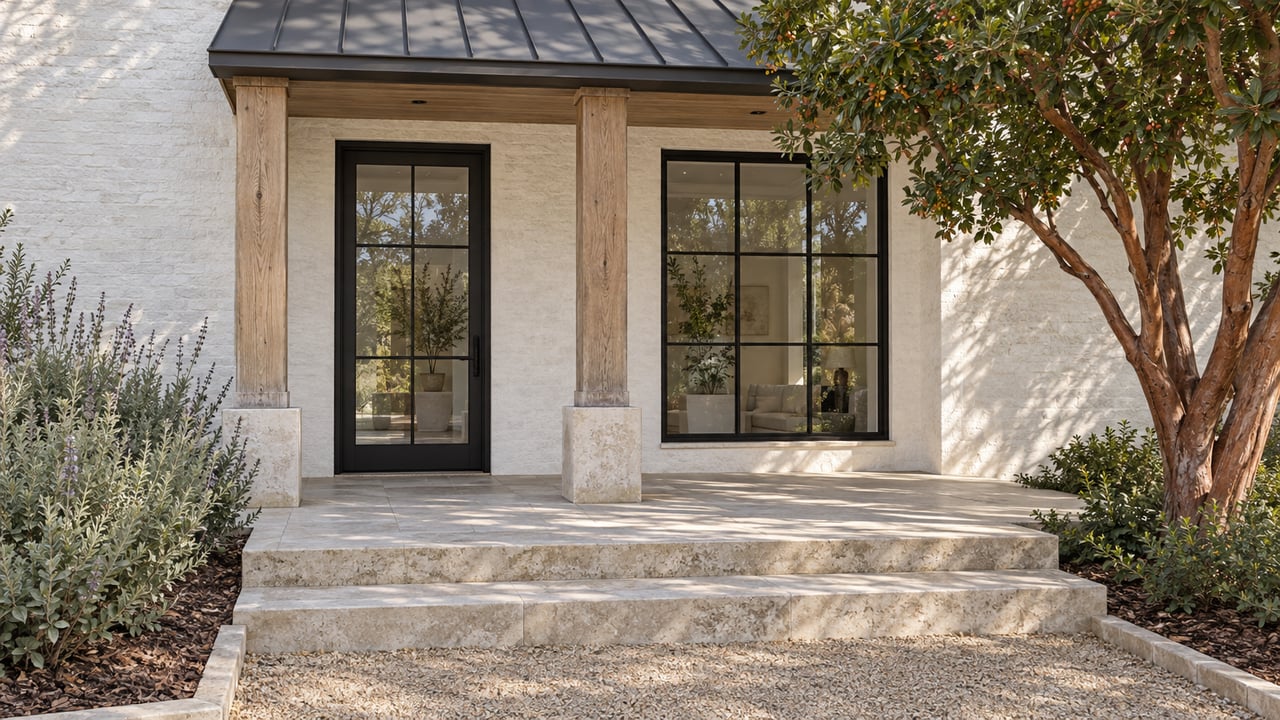
The Healdsburg Building Its Growth Cap Was Never Going to Count
October 15, 2026
October 15, 2026
On Monday, October 5, the Healdsburg City Council voted 4-0 to deny an appeal of The Hudson. That clears the way for a four-story senior living building at 359 Hudson Street, inside the same planning corridor where voters, in November 2024, refused to exempt multifamily housing from the town's growth cap. Both of those facts hold because the growth cap was never the rule that applied to this project. The cap controls how many ordinary market-rate permits the city hands out each year. It has never controlled how tall a building gets or how close it sits to its neighbors.
Anyone comparing Healdsburg addresses has probably heard that the town caps itself at about 30 new homes a year. That number applies to ordinary market-rate permits, and the ordinance itself lists the housing types it leaves out.
Healdsburg's Growth Management Program allows an average of 30 ordinary residential allocations a year, with no more than 90 in any three-year period. Measures P and H added a second pool, averaging 50 a year and capped at 150 per three years, for qualifying income-restricted multifamily projects.
The applicability clause in the city's Growth Management policies is where the real limits sit. The rules cover residential building permits issued on or after January 1, 2001, "excluding affordable housing units, accessory dwelling units, replacement or reconstruction of existing residences, emergency shelters, nursing homes, senior housing, sanitariums and residential care facilities."
The Hudson combines three of those excluded categories: senior apartments, a residential care component, and affordable rentals. Patch reported that city officials had said they could not block the development, because Gallaher Signature Living included two categories of housing the ordinance does not cover. The city's October 5 staff report doesn't discuss allocation status directly. Still, under the published exemptions, the project draws on neither pool.
This is where the 2024 vote becomes relevant. According to the county's ballot materials, Measure O would have exempted multifamily housing, but not single-family homes, from growth management limits in three places. Those were the Healdsburg Avenue North Corridor between North Street and Grove Street, the Central Healdsburg Avenue Plan area, and the South Entry Area.
It failed. Ballotpedia's certified tally for the November 5, 2024 election shows 2,615 yes votes and 3,325 no votes, a split of 44.02% to 55.98%.
The city's appeal report confirms that The Hudson falls under the Central Healdsburg Avenue Plan, known locally as CHAP. In other words, the largest housing approval in that corridor this year moved forward even though the measure that would have opened the corridor to multifamily projects lost. Measure O was about ordinary multifamily housing that needs allocations. Senior and affordable housing never needed them.
The cap explains why The Hudson didn't need permission to exist. California's Density Bonus Law, Government Code §65915, explains why it is bigger than local zoning alone would have allowed. Gallaher filed a Housing Accountability Act application, identified as SB 330, on October 3, 2025. A density bonus application followed.
The city's resolution lays out the math:
The bonus also brings incentives and waivers, and the city's discretion over those is narrow. The October 5 council staff report found the project entitled to three incentives. On waivers, it said:
"The Project is entitled to unlimited waivers, and has demonstrated that the development standards for which a waiver is requested would have the effect of physically precluding the construction of the housing development as designed."
Under state law, the report explained, incentives must be granted unless specific statutory findings support a denial. It named height and setbacks among the standards modified. The project did not ask for a parking reduction.
The site is a former lumber yard of roughly 3.61 acres. The plan calls for a four-story main building, a separate one-story memory care building with six beds and a manager's unit, and the 10 affordable rentals.
Before the Planning Commission hearing, Patch reported the requests the density bonus made possible:
The neighborhood concerns centered on exactly those points. Patch reported that a concern raised at the hearing was that the building had been expected to stand about 40 feet tall. Other residents raised traffic concerns at the curve where Hudson and Harmon streets meet. The Planning Commission approved the project on August 11, 2026, and two residents filed an appeal on August 20.
The council and staff did win changes, and those changes show how much room a city has to work with. The Healdsburg Tribune reported that the affordable units grew from about 380 square feet to about 700. Each is now a one-bedroom with 1.5 baths and a garage below. According to Patch, adding a third floor to the two affordable buildings brings them to about 33 feet, under the mixed-use district's 40-foot limit.
The north-south path was harder to secure. CHAP favors connectivity through the site, and Gallaher originally agreed to the path. At the hearing, Gallaher's representative said its location near the memory care units could create a state licensing problem. After a brief recess, the Tribune reported, the final language did not guarantee a path but increased Gallaher's responsibility to pursue a suitable location.
The reported parking figures also differ. In August, Patch reported 145 spaces in the city staff report and about 151 in the applicant's narrative once street parking was included.
The Hudson isn't the first project to take this route. The city's 2022 annual report records the 30-unit apartment project at 3 Healdsburg Avenue, approved December 13, 2022, which included six State Density Bonus Law units. A pattern is forming, and it is tied to geography.
CHAP covers 71.5 acres in southwest Healdsburg, running from the U.S. 101 Central Avenue exit north to the five-way intersection of Healdsburg Avenue, Mill Street, and Vine Street. The city adopted it in January 2014. The cap keeps limiting market-rate subdivisions across town. Inside a mixed-use corridor like this one, the size of a nearby building depends on which housing types a developer combines and what state law then requires the city to grant. When comparing two homes at similar prices, these questions bring out the difference:
Policy may move too. Healdsburg's adopted, state-certified Housing Element names the growth management ordinance as the city's primary governmental housing constraint. Its Program 7 calls for choosing amendments by the end of 2026 and lays out ballot options for the 2024, 2026, 2028, and 2030 election cycles. On the same October 5 agenda, staff recommended a resolution reaffirming workforce and middle-income housing objectives. That resolution would not amend land-use rules. The agenda also noted the independent Healdsburg Housing Trust, which presented to council on March 2, 2026, and incorporated as a nonprofit in April 2026.
Does The Hudson use any of the 30 annual allocations? The published exemptions cover senior housing, residential care facilities, and affordable units, and city officials described the project as falling outside the ordinance. The October 5 staff report doesn't state an allocation figure.
Is there a growth management measure on a 2026 ballot? The Housing Element schedules ballot options for 2026. The research behind this post found no confirmed 2026 measure.
Did the city have any say at all? Yes, on terms like unit size, the path language, and how the project would be managed. The council questioned Gallaher closely on operations, from resident intake to medical needs. The density bonus itself was not up for negotiation.
If you're weighing a Healdsburg home near the Central Healdsburg Avenue corridor and want to know what the parcels around it could hold, Ceci Cook can walk you through the zoning and the recent decisions before you write an offer. Let's Connect.
This article is general information, not legal, tax or financial advice. Consult a qualified professional about your situation.
Primary phone
(650) 868-9188License Number
#01159739Address
109 Mill StStay up to date on the latest real estate trends.
A Practical Guide to Mortgages for Buyers in Healdsburg.
Here’s How I Advise Healdsburg Buyers on Mortgages.
How to Choose the Right Real Estate Agent in Healdsburg for Wine Country Buyers and Sellers.
Experience exceptional real estate service with Ceci, dedicated to helping you achieve your goals in the San Francisco Bay Area and Wine Country. Contact her today to get started!