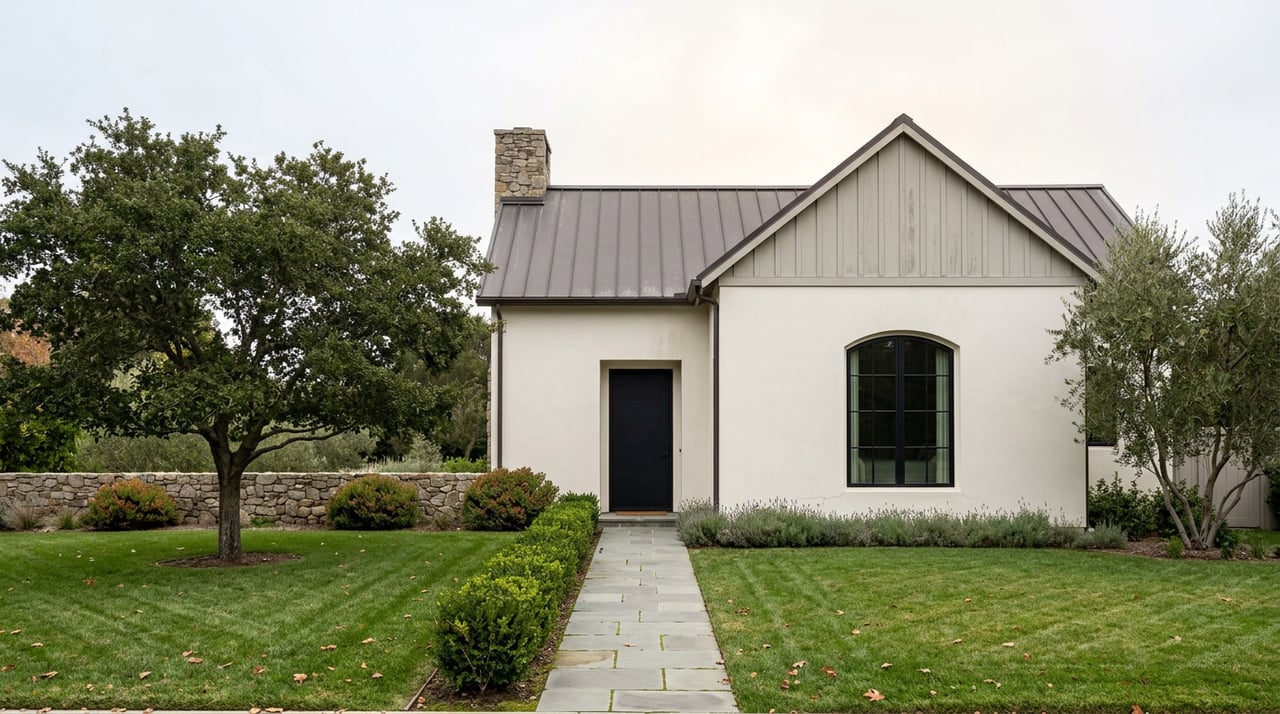
The 30-Home Limit Quietly Shaping Every Healdsburg Purchase
September 3, 2026
September 3, 2026
Ask why a buildable lot inside Healdsburg city limits is so hard to find, and most people point to hills, vineyards, or wine tourism dollars. The real answer is a number. Since 2000, the City of Healdsburg has capped new residential building permits at an average of 30 per year, city-wide, for every type of market-rate housing. That single voter-approved rule, not scenic value alone, explains why buyable dirt is scarce and why an existing house with a tear-down clause hidden in its listing can be worth more than an empty lot next door.
If you're picturing a straightforward path where you buy vacant land, submit plans, and pull a permit, Healdsburg breaks that assumption early. Most new construction here needs something called a growth management allocation before a building permit can even be issued, and those allocations are handed out on a schedule, not on demand.
Healdsburg voters created the Growth Management Ordinance through Measure M in 2000, and it's codified in Chapter 17.24 of the Healdsburg Municipal Code. The core rule: permits for new residential units are limited to an average of 30 per year and never more than 90 in any rolling three-year period. Because it was adopted by voter initiative, the city can't simply amend it through a council vote. Any real change requires another trip to the ballot.
Two allocation pools exist side by side:
| Pool | Authorized by | Annual average | 3-year cap | Who competes for it |
|---|---|---|---|---|
| Base pool | Measure M (2000) | 30 units | 90 units | Category A (1-4 unit projects) and Category B (5+ unit subdivisions), market rate |
| Workforce pool | Measure P (2018), Measure H (2020) | 50 units | 150 units | Deed-restricted rental or for-sale units, capped at 160% of Sonoma County area median income |
Both pools exclude a short list of exempt project types entirely: accessory dwelling units, junior ADUs, low-income and affordable housing, and one category worth remembering if you plan to build custom, which is a like-for-like replacement of an existing home on its original lot.
The city's most recent published annual accounting, covering 2022, shows how thin the competitive pool really is in practice. Healdsburg issued permits for 68 new residential dwelling units that year. Of those, only 4 came from that year's fresh Category A allocation, the pool most people assume they're competing in when they picture building a custom home on an individual lot. Another 18 were fully exempt from the ordinance, split between 14 ADUs and 4 replacement dwellings. The remaining 46 were allocations banked in prior years and assigned almost entirely to two large, already-entitled projects: 3 to Saggio Hills and 43 to the Mill District.
Category B, the pool that actually creates new subdivided lots rather than infill on existing ones, was even tighter. The same report noted only 10 Category B allocations remained available through the end of that three-year cycle in 2024.
Read together, those numbers say something most buyers don't expect walking in. The competitive market-rate pool isn't where new housing comes from in Healdsburg most years. Exemptions and previously banked allocations to a handful of named projects are doing almost all of the work.
This is the detail that changes how a buyer should shop. City code exempts the replacement or reconstruction of an existing residence on the same lot from the allocation requirement entirely. A buyer who wants an architect-built custom home doesn't need to enter the queue for one of those scarce Category A or B slots, provided the property already has a house on it to remove.
That reframes what a tear-down candidate is worth here. In most markets, an aging house on a good lot is a discount play, priced for the land and little else. Inside Healdsburg city limits, that same property can be the fastest, and in some years the only realistic, path to new construction without a waiting list. A raw vacant parcel, by contrast, may need a fresh allocation that simply isn't available that cycle.
Some buyers assume a rule like this will eventually get relaxed once housing costs bite hard enough. Healdsburg tested that assumption directly. The city's own 6th Cycle Housing Element named the growth ordinance as a barrier to meeting its state-mandated housing targets, and after more than a year of council workshops, public polling, and staff reports, the city put Measure O on the November 2024 ballot. It would have exempted multifamily housing from the cap along three specific corridors: the Healdsburg Avenue North corridor between North Street and the Community Center, the Central Healdsburg Avenue Plan area, and the South Entry Area Plan.
Voters rejected it, and by a wide margin. Certified results show it failed by roughly 60 percent to 40 percent. The Yes on O campaign raised more than $10,000, including contributions from then-councilmember Ariel Kelley and local business owners, and still lost decisively. That vote landed the same night Kelley and then-Mayor David Hagele were both on the ballot for reelection.
The workforce pool created by Measure P hasn't closed the gap either. According to the city's own staff report prepared ahead of that 2024 measure, no new middle-income multifamily housing units had been constructed in the six years since Measure P passed in 2018, despite that pool allowing up to 50 additional units a year.
Put those two facts together and the takeaway for anyone planning a purchase is straightforward. The base cap has stood unchanged for 25 years, survived a well-organized attempt to carve out exceptions, and its supplemental pool has produced close to nothing. There's no evidence the supply constraint eases soon.
If you're weighing Healdsburg against other Sonoma or Napa towns while relocating from the Bay Area, adjust your expectations about where inventory actually comes from. Inside city limits, existing homes, not ground-up construction on individual lots, are the primary path to ownership. Nearly all of the near-term new supply is concentrated in a short list of large, already-entitled projects with names worth knowing if you're tracking the pipeline: Mill District, roughly 208 homes with an affordable component; Enso Village, senior housing at about 221 units; North Village/Comstock, 77 homes; Saggio Hills; and 155 Dry Creek, 58 affordable homes.
Outside those named projects, a buyer hunting for a brand-new custom build on its own lot is competing for a handful of allocations a year, some of which carry a waiting list tied to building permit readiness rather than purchase date. Before writing an offer on raw land inside city limits, it's worth asking whether that specific parcel already holds an allocation, sits on a waiting list, or would need to compete fresh. Before passing on a dated house because it needs full reconstruction, it's worth asking whether that same property qualifies for the replacement exemption and could get you to a custom build faster than the empty lot down the road.
Does the 30-unit cap apply to land outside Healdsburg's city limits? No. Chapter 17.24 governs only incorporated Healdsburg. Land in unincorporated Sonoma County, including Dry Creek Valley and Alexander Valley parcels near town, follows county zoning and permitting rules instead.
Do ADUs need a growth management allocation? No. Accessory dwelling units and junior ADUs are fully exempt from the ordinance, which is part of why they've become the default way to add a unit inside city limits without waiting on the allocation pool.
Does this cap affect resale home prices directly? The ordinance regulates permits for new construction, not resale transactions. What it does is shape how much competition exists for the existing housing stock, particularly for properties that qualify for the replacement exemption, since that route to a new build bypasses the queue entirely.
If you're comparing Healdsburg to other North Bay towns and want to know whether a specific property already holds an allocation, sits on a waiting list, or qualifies for the replacement exemption, that's exactly the kind of parcel-level homework worth doing before you write an offer. Ceci Cook works this market daily and can help you sort out what a given address actually allows before you fall for the wrong lot. Let's Connect.
Primary phone
(650) 868-9188License Number
#01159739Address
109 Mill St,Stay up to date on the latest real estate trends.

These Are Healdsburg’s Best Green Spaces and Parks.
Why Timing Your Healdsburg Home Sale Makes All the Difference.
A Culinary Destination in the Heart of Wine Country.
Experience exceptional real estate service with Ceci, dedicated to helping you achieve your goals in the San Francisco Bay Area and Wine Country. Contact her today to get started!