The Two Parallel Clocks That Decide Whether Your Healdsburg Escrow Closes
August 6, 2026
August 6, 2026
Most Healdsburg buyers arrive at the closing table thinking the negotiation is behind them. Price is agreed. The inspection came back reasonable. The lender is moving. And then the deal stalls, not on anything the parties said to each other, but on two due-diligence tracks that run on their own schedules and answer to their own regulators. One is insurance. The other is the well and septic. On a rural parcel above Fitch Mountain or out along Chalk Hill, Westside, or West Dry Creek Road, both must land cleanly before escrow can. Understanding how those clocks tick, and where they slip, is the single most useful thing a buyer or seller can do once a Healdsburg property goes into contract.
A conventional Bay Area transaction treats homeowners insurance as a form to fill in the last week. In a Sonoma County fire zone, it is the gating item. Every mortgage lender requires proof of hazard insurance before you can close, and in a wildfire zone that requirement is where deals stall. The lender is named as mortgagee on the policy and will not fund a loan, or will not let escrow close, until it sees a bound policy with adequate dwelling coverage. This is the single most common reason wildfire-zone home purchases fall through.
The well and septic track has a different rhythm. Permit Sonoma controls the records, the inspection codes, and the monitoring calendar. Certain tests can only be run in specific windows of the year. A recorded easement on a non-standard septic system may travel with title in a way the buyer had not modeled. Neither track cares about the other, and both must be satisfied on the buyer's timeline.
The California market has settled into a three-rung structure that any buyer of a Healdsburg parcel with meaningful brush exposure should learn before writing an offer. You can almost always insure a home in a California high fire area in 2026, but rarely the way you expect. The path runs down a ladder: an admitted carrier if your Fire Hazard Severity Zone and brush score still qualify, then surplus-lines coverage, and finally a California FAIR Plan fire-only policy paired with a Difference in Conditions wrap.
| Rung | What it is | What to expect in a Healdsburg rural deal |
|---|---|---|
| Admitted carrier | A standard California-licensed insurer | Available on some in-town and lower-brush parcels, particularly with documented mitigation |
| Surplus lines | Non-admitted specialty coverage | Common on hillside and canyon parcels declined by admitted carriers |
| FAIR Plan + DIC | State fire-only pool paired with a wrap policy for liability, water, theft | The default on many rural parcels; requires two policies, two premiums, two binders |
Two 2026 numbers do the interpretive work here. The FAIR Plan filed a 35.8% average rate increase in October 2025, pending CDI approval for an April 2026 effective date, with some high-risk policyholders facing +40% to +55%. And roughly 41% of residential structures in the highest-risk ZIP codes carry a FAIR Plan policy as of March 2026, versus about 4% in lower-risk areas, with the FAIR Plan holding roughly 668,000 policies entering 2026, up from about 154,000 in 2019.
The practical read for a Healdsburg buyer: if the parcel you are pursuing is in a high or very high Fire Hazard Severity Zone, you should assume a FAIR Plan plus DIC stack until an admitted broker proves otherwise, and you should budget for both premiums to rise mid-escrow. A DIC wrap typically adds 25% to 60% on top of the FAIR Plan premium, so budget for the stack, not just the fire policy.
Buyers relocating from the Peninsula or South Bay often assume Healdsburg is uniformly high-risk. The city's own hazard mitigation work says otherwise. Wildfire severity is categorized into three zones: moderate, high, and very high. Healdsburg has no areas located in the very high severity zone. Per an exposure analysis completed for the City's LHMP, over 50 percent of the city's critical facilities, about 30 percent of residential structures, and almost 25 percent of the population are in a moderate or high wildfire severity zone.
There is a second Healdsburg-specific detail with real dollar consequences at renewal time. Unlike most municipalities, the City of Healdsburg operates its own electric utility, and the community benefits from lower electric rates compared with PG&E. That means in-town parcels sit outside the PG&E Public Safety Power Shutoff footprint that applies to surrounding rural roads, which changes both lifestyle expectations and, in some underwriting models, risk scoring.
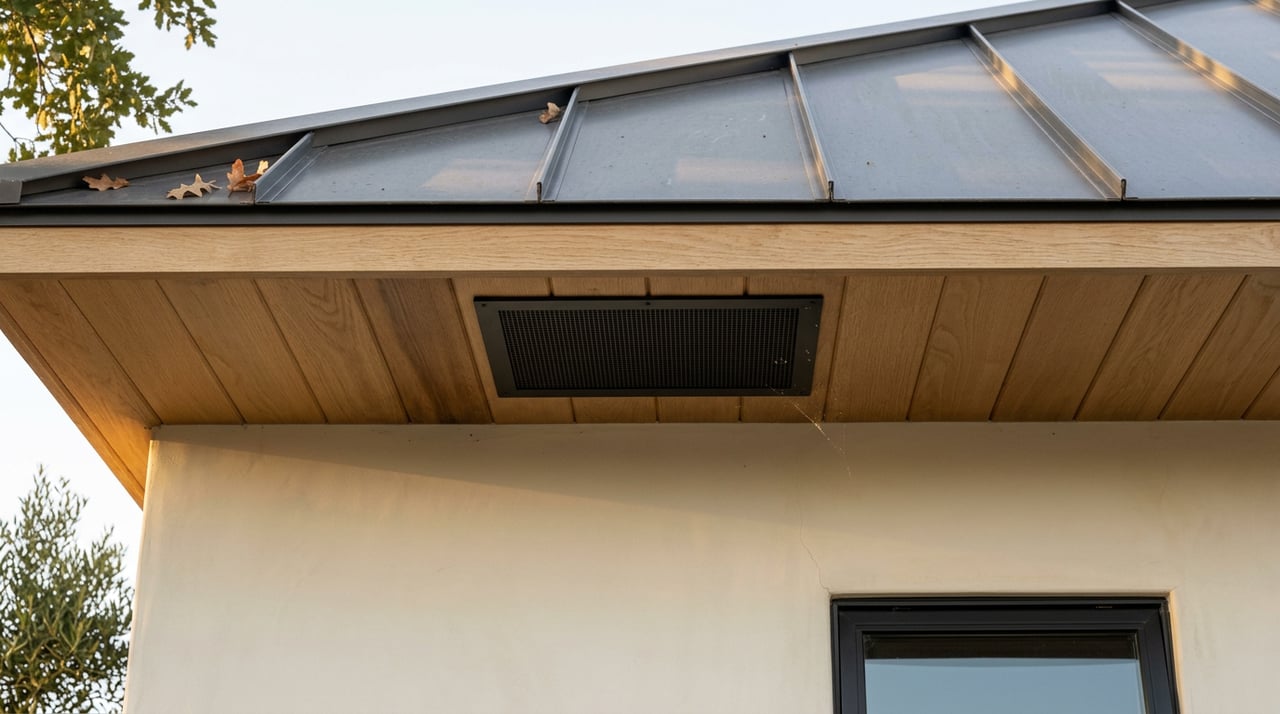
The mitigation lever is real and worth pursuing before the appraisal comes in. Safer from Wildfires gives FAIR Plan dwelling-fire policyholders up to a 13.8% wildfire-premium discount, and Class A roof, ember-resistant vents, and a non-combustible 0-to-5-foot Zone 0 are the same items admitted underwriters want to see for re-entry.
Most Healdsburg buyers coming from municipal-water markets underestimate how independent this track is from the home inspection. Standard residential inspections do not cover the well or the septic; you are ordering separate specialists on a separate clock.
Three items matter more than the rest.
Records first. Permit Sonoma maintains well completion reports, as-built septic plans, and any operational permit history. Pull them before ordering field work. If the property carries a non-standard system, you will find yourself inside a regulatory program with ongoing obligations. Property owners installing a septic system utilizing supplemental treatment must apply for an OPR permit prior to final approval of the septic system. As part of the OPR permit application, property owners must submit a notarized OPR permit easement agreement which gets recorded on the property. The easement agreement authorizes Permit Sonoma staff to enter the property and access various components of the septic system to perform periodic monitoring inspections required under the State OWTS Policy.
That easement travels with title, and the owner's obligations are ongoing. Owners must maintain septic system components in good working condition, pump tanks as needed, keep components and dispersal areas accessible, perform biannual self-monitoring inspections and report results to Permit Sonoma, and renew OPR permits and pay applicable fees annually.
Water quality and yield are two different tests. At minimum, plan on bacteriological and chemical panels. Minimum recommended tests are total coliform, E. coli, and nitrate, with additional analytes based on local history. Yield testing is separate, and Sonoma County restricts when it can be performed to protect the aquifer signal. If your lender requires it or the county requires it for a subsequent building permit, plan for the seasonal window rather than assuming a same-week turnaround.
Standard home inspections do not do this work. A rural due-diligence workflow described by one Sonoma broker puts it plainly: the home inspection will not inspect the well or septic system and will only do a visual inspection of the roof, and the cost of a home inspection will vary depending on the size of the property but approximately $450 up to $1000 on the largest homes. County guidance from neighboring jurisdictions underscores why the specialist visits matter: failure of an onsite wastewater treatment system, or an individual water system such as a domestic well or spring, can be extremely costly, with replacements potentially reaching $100,000.
The most reliable Healdsburg escrows treat these tracks as parallel, not sequential. A working order that has held up on rural transactions:
Does a FAIR Plan policy alone close the loan? A FAIR Plan policy alone usually will not satisfy your lender, because it is fire-only, and most lenders require a DIC wrap to cover liability, water, theft, and loss of use.
Is there a countywide point-of-sale septic inspection requirement in Sonoma County? The county monitors certain advanced systems under the OPR program, but it does not run a blanket countywide point-of-sale inspection requirement. That does not remove the buyer's practical need to inspect.
Are new admitted carriers coming back to fire-prone areas? State reforms are pointed in that direction. The Sustainable Insurance Strategy requires carriers that want to use catastrophe modeling for rate-setting to commit to writing policies in wildfire-distressed areas, covering at least 85% of their statewide market share in FAIR Plan areas. The pace of that re-entry will vary by ZIP and by parcel.
If you are under contract on a Healdsburg property, or preparing to write an offer on one, the moves that protect your closing date are made in the first two weeks. A calm, sequenced due-diligence plan, tuned to the specific parcel and its fire and water context, is what turns a fragile escrow into a closed one. To talk through a specific address or timeline, Ceci Cook is available to help. Let's Connect.

Primary phone
(650) 868-9188License Number
#01159739Address
109 Mill St,Stay up to date on the latest real estate trends.

These Are Healdsburg’s Best Green Spaces and Parks.
Why Timing Your Healdsburg Home Sale Makes All the Difference.

A Culinary Destination in the Heart of Wine Country.
Experience exceptional real estate service with Ceci, dedicated to helping you achieve your goals in the San Francisco Bay Area and Wine Country. Contact her today to get started!